
🌟 What is a réserve perpétuelle?
Time as an ingredient
Champagne is never a snapshot. Behind every cuvée lies a story of time, patience and choices. One of the most distinctive ways to make that time tangible is the réserve perpétuelle, a system you can compare to a living wine library.
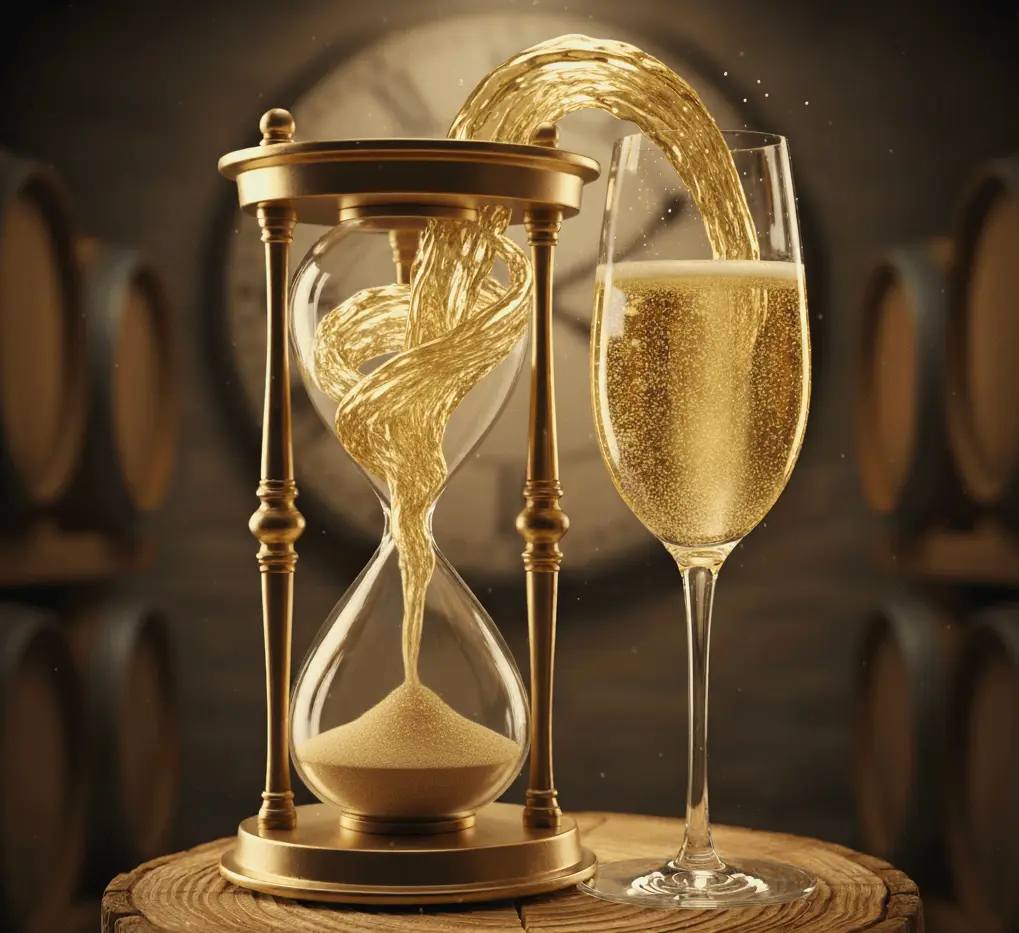
From reserve wines to réserve perpétuelle
Nearly every Champagne house works with reserve wines: still wines from previous vintages added to a new harvest to bring complexity and continuity.
A réserve perpétuelle goes one step further. Each year, a large vat (or several) is only partially drawn off for blending. What remains is topped up with wine from the latest harvest. In this way, young and old are constantly interwoven:
- Older vintages bring depth, structure and more mature aromas.
- Younger vintages add freshness, energy and drive.
The result is a blend that doesn’t just reflect the latest harvest, but carries the story of decades within it.
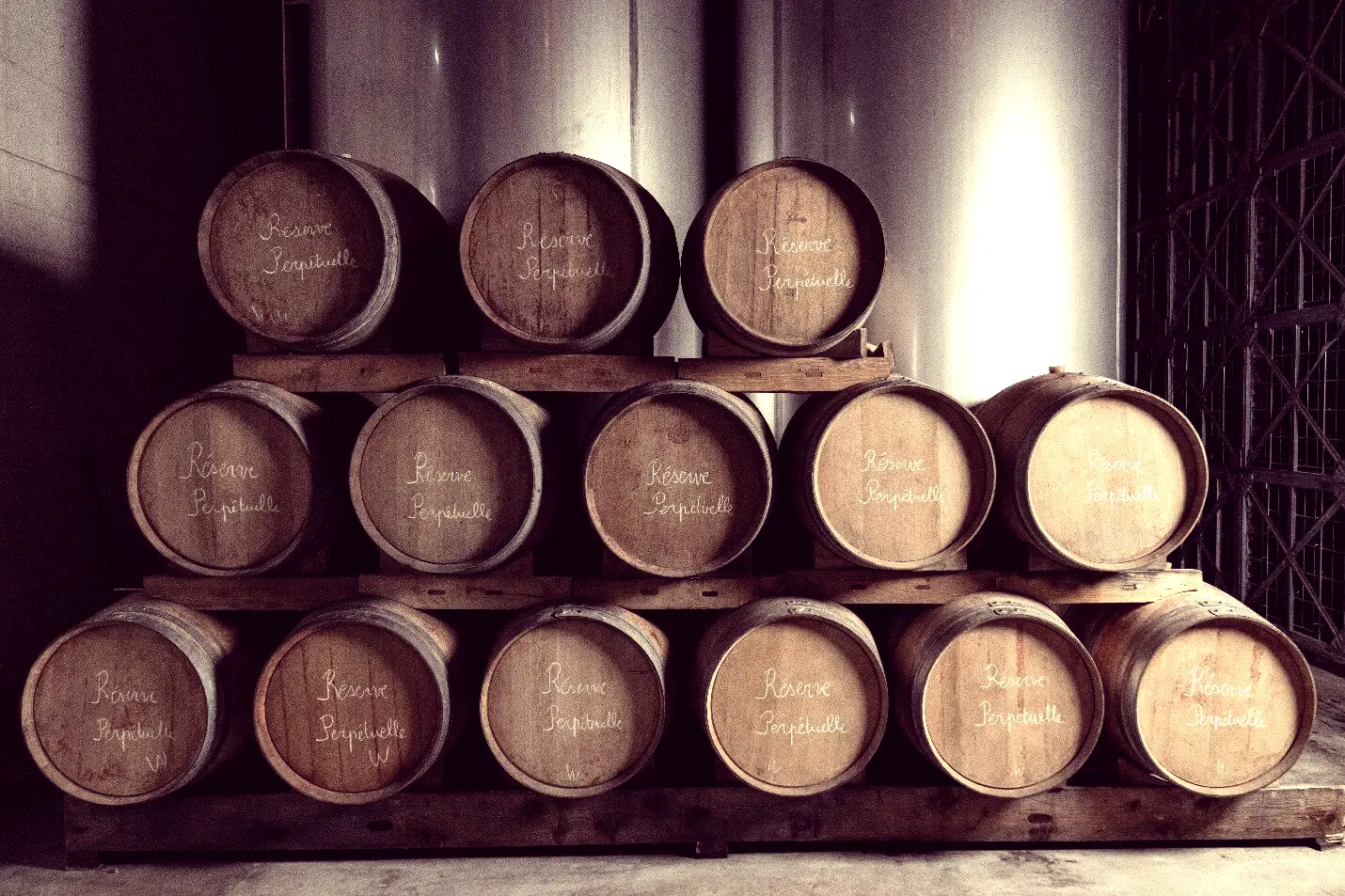
A living memory
A réserve perpétuelle is best seen as an ongoing process. While classic reserve wines run out after a few years, this library remains and keeps growing. Each harvest leaves a trace that can still be recognised in future cuvées.
That’s what makes wines made with this system so special: you taste both past and future at once. For the winemaker, it’s a way to preserve the house style while adding extra layers and complexity.
✨ Brut23 - champagnes with a story
At Brut23, these are the stories that make champagne truly special. A cuvée partly built on a réserve perpétuelle is more than bubbles in a glass: it’s the result of decades of care, tradition and creativity.